
A Look Inside My Quiet Time
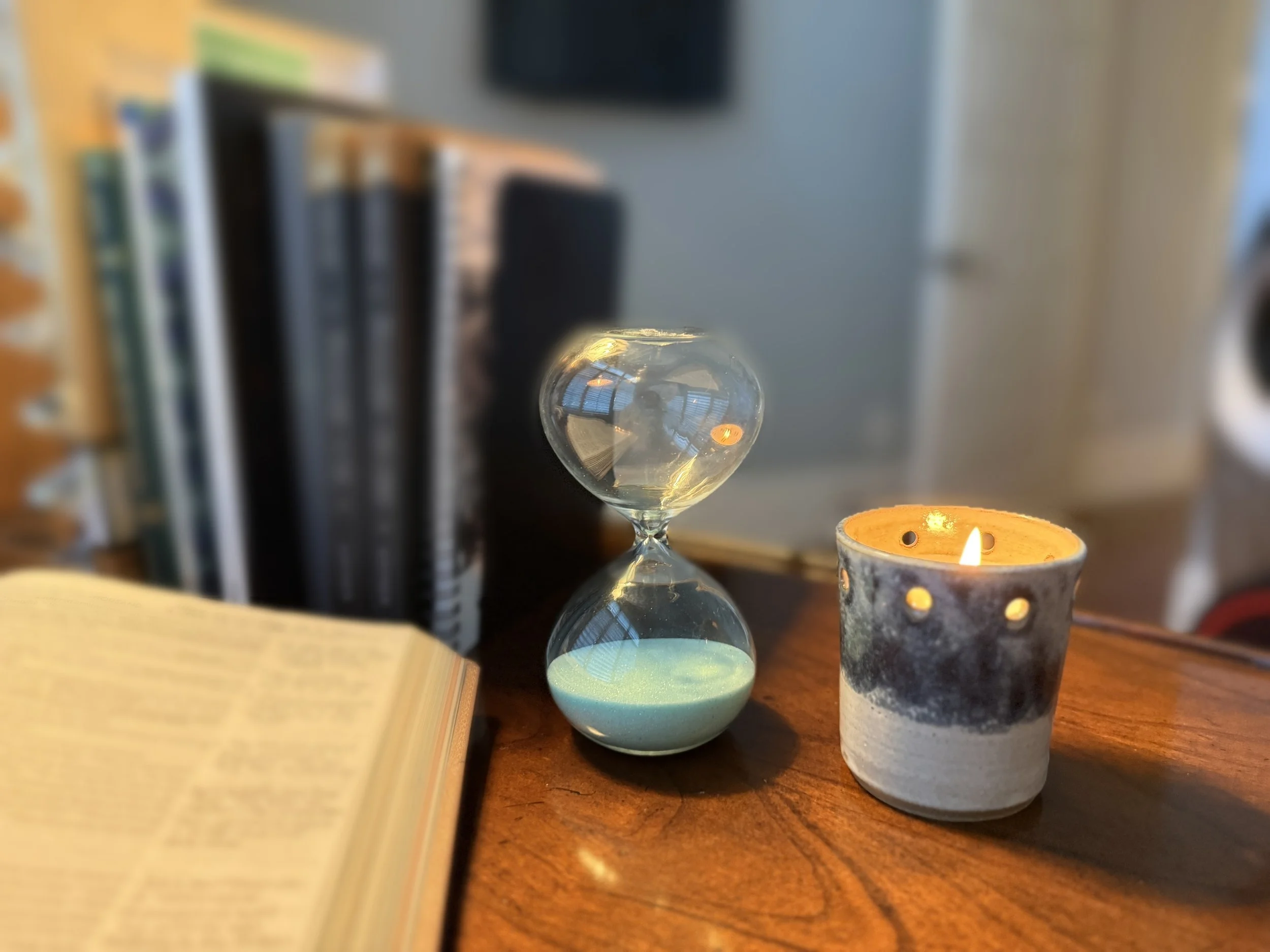
Most mornings, I turn over a glass sand timer and say, “Speak, Lord, your servant is listening.” Then I wait.
The sand timer is a recent addition to my morning routine. The way I spend time with God has changed through different seasons of life, incorporating Bible reading plans, journals, prayer notebooks, prayer cards, and devotionals. Some practices have lasted for decades, while others have come and gone.
I love hearing how other Christians spend time with God which has given me ideas for my own devotional time. So I’m sharing what I’ve done in hopes that it helps you shape your own. I'm certainly not offering a formula for the perfect quiet time. By quiet time, I simply mean time set apart to be with God, without other distractions.
For me, having consistent time with God begins the night before. If I know beforehand where I’ll sit, what I’ll read, and when I’ll start, I’m far more likely to follow through. And that usually means deciding when to go to bed.
Before I get into the specifics, I want to emphasize that spending time with God doesn't make him love us more. If we are in Christ, we already have his unmerited favor. We don’t read the Bible and pray to earn his love, but to know him better and love him more.
Begin with the Bible
Someone recently suggested that if you have 20 minutes for a quiet time, a good division of time would be reading the Bible for 5 minutes and then spending 15 minutes meditating on what you've read and praying. I needed to hear that because I often read for the majority of the time and leave little time for anything else.
It's tempting to race through a Bible reading plan just to finish the day's assignment. Yet thoughtfully considering just a few verses has benefited me far more than hurriedly reading several chapters. For people who haven’t had a regular quiet time, I always suggest starting with something manageable, like slowly reading through a Gospel.
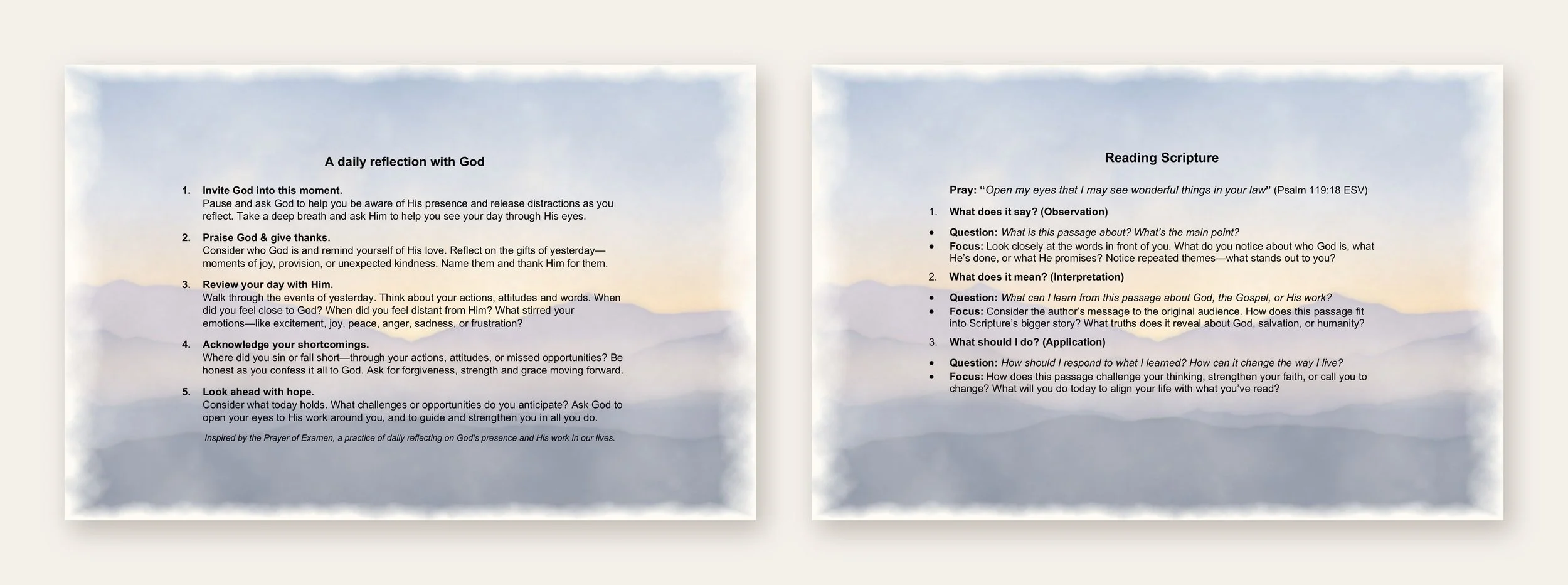
Before I read Scripture, I pause and ask the Lord to help me understand what I’m reading. When I read, I pay attention to the text itself, looking closely at the words and repeated phrases and ideas. Then I look at it again to identify the main point or points so I understand what it means and what the author intended to communicate. Lastly, I prayerfully consider how I can respond in light of what I just read. I’ve written these principles on one side of a free printable card that I’ll describe below.
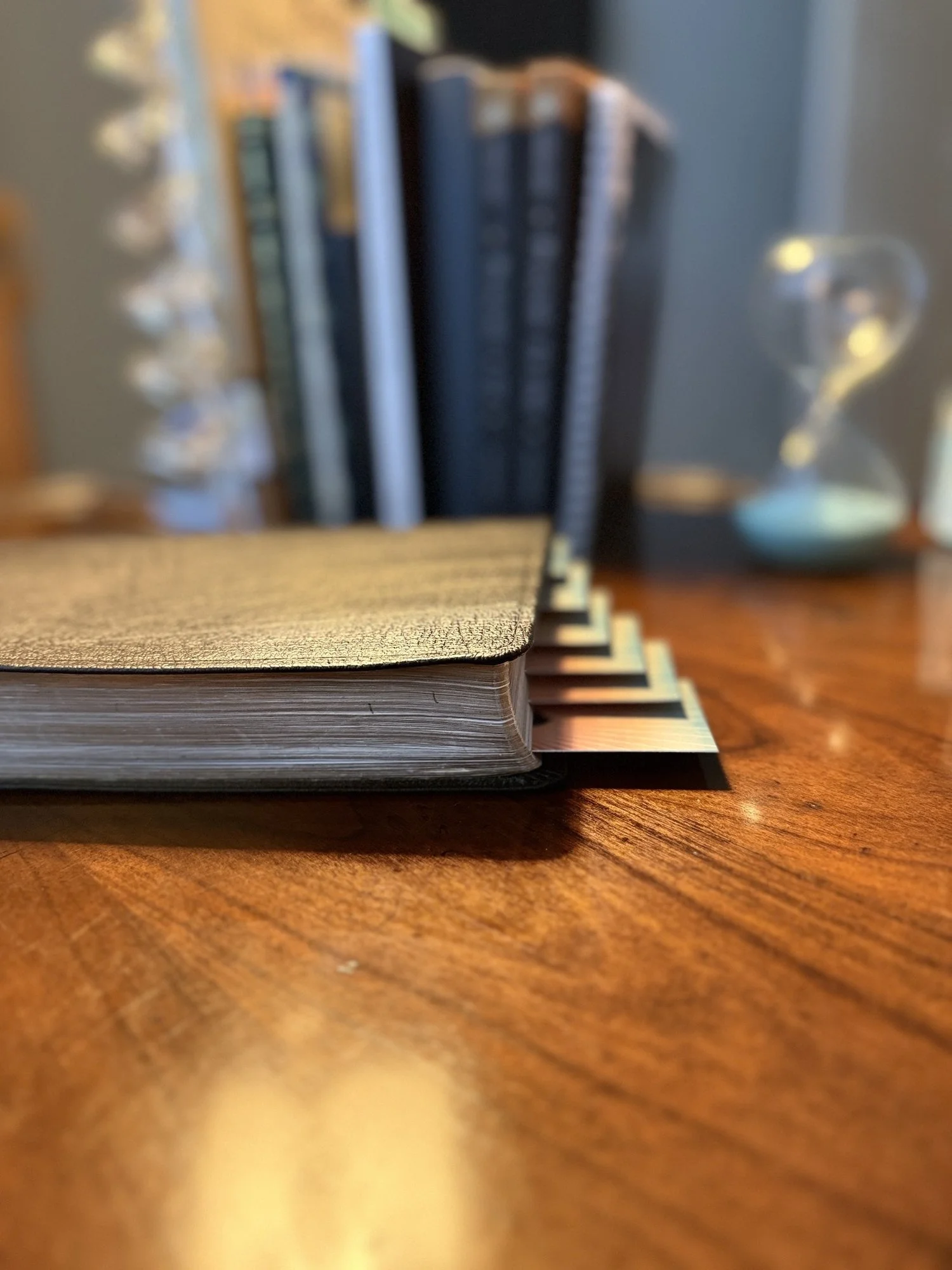
My Bible reading plan varies from year to year. One of the easiest to begin, and one of my favorites, is what I call the “tab” method. Place bookmarks, or tabs, in six places — Genesis, Joshua, Job, Isaiah, Matthew, Romans. Those places correspond to the Pentateuch, history books, poetry and wisdom literature, the Prophets, the Gospels and Acts, and the New Testament Letters. You read in one or more sections each day, however much or little you want, moving the bookmark along as you read. It gives you the freedom to vary what you’re reading, always having a place to return to so you’re not flipping around trying to figure out what to read. I used it for many years and highly recommend it, especially if you’ve felt discouraged trying to keep up with a daily reading plan.
I’ve also read through the Bible in a year using different reading plans, and often in different translations that I list under “Tools & Resources I’ve Found Helpful.”
Make Time for Prayer
While prayer doesn’t come as naturally for me as reading, my prayer life has grown in recent years as I’ve been more dedicated to it. That sand timer I mentioned earlier has helped me be more intentional about praying. Just turning it over helps me settle into prayer and ensures that I set aside enough time for it.
I usually begin by saying, “Speak, Lord, your servant is listening” (1 Samuel 3:9), after which I spend at least 3-5 minutes in silence. This helps me align my heart with the Lord’s rather than seeing prayer as bringing a laundry list of requests. I want to hear what God may be saying to me first.
After that time of silence, I usually pray through my “A Daily Reflection with God” card. It includes praise and worship, reflection on the day before, confession and repentance, and looking to the day ahead. It is a double-sided card in which one side has this daily reflection and the other has the Bible study questions I mentioned above. You can download it here.
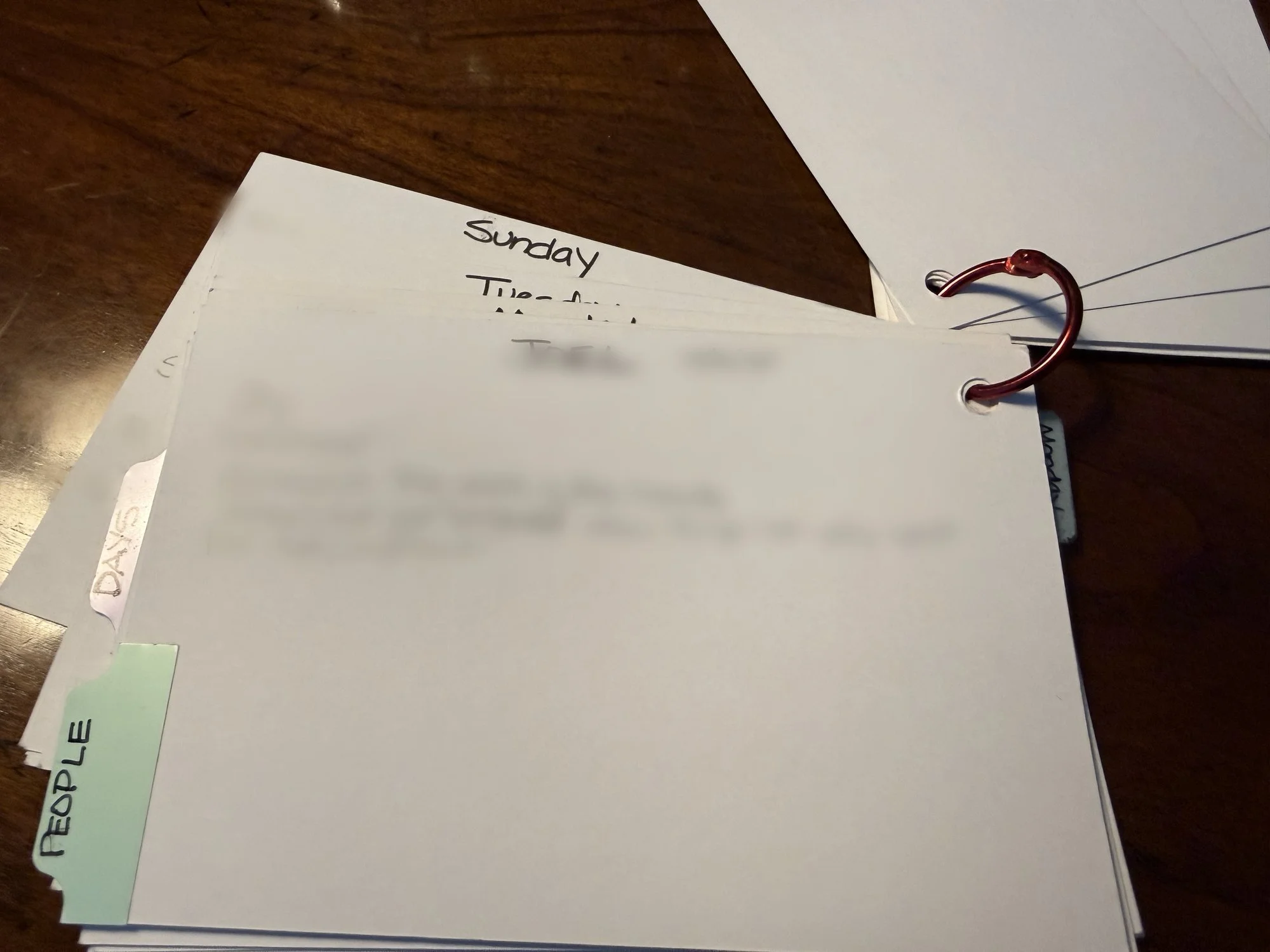
Then I switch to my prayer cards, which are notecards that I attach with a spiral ring. They include long-term prayer requests, with cards for everyone in my family as well as friends and ministries. I based these cards on Paul Miller’s book, A Praying Life.
Consider Journaling
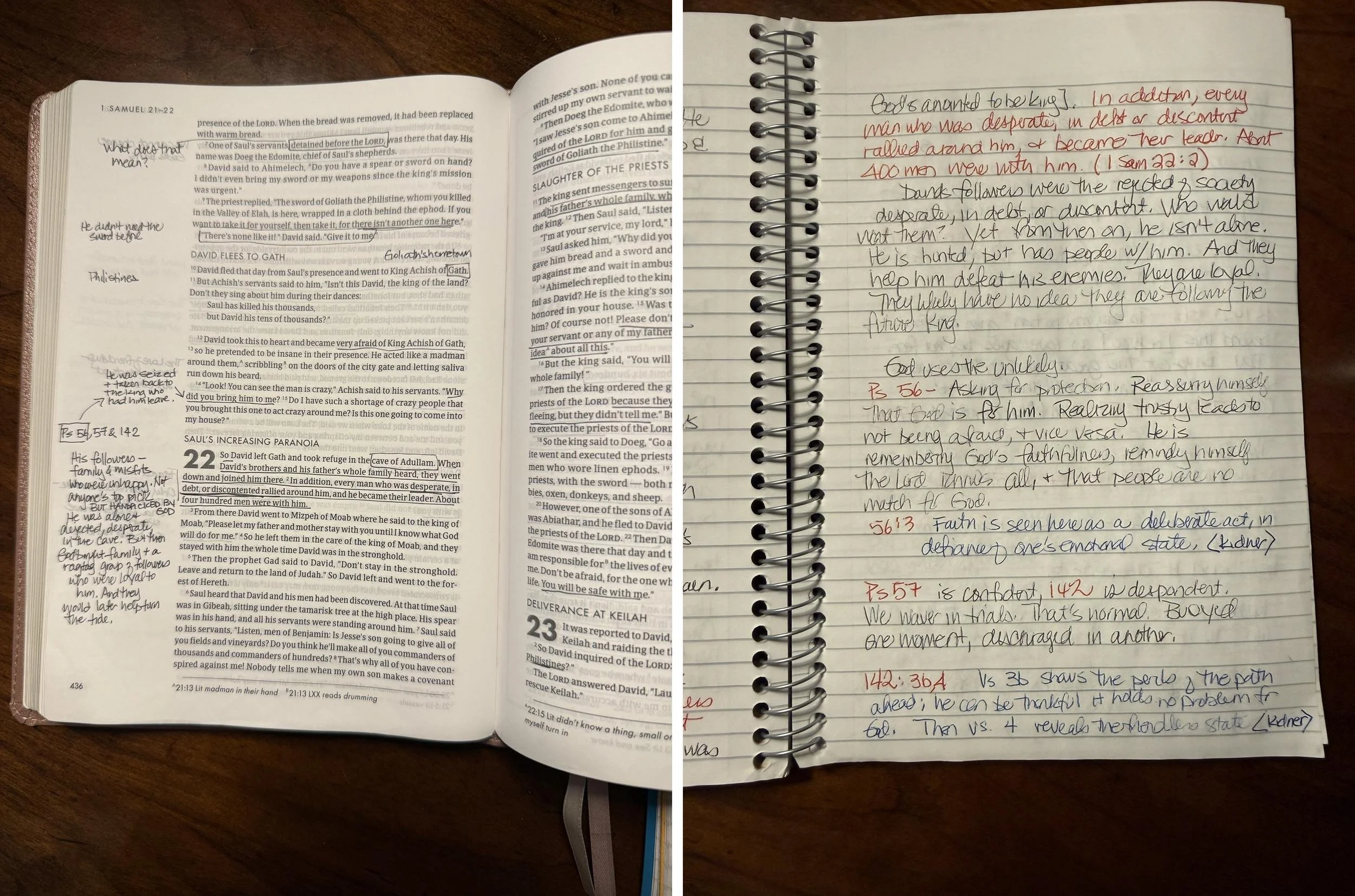
I have kept journals since I was 16 years old. The real value in journaling for me is that it is a place to be both honest with myself and honest with God. I can see the areas I’ve grown in and the struggles I continue to battle. I am reminded of miraculous answers to big prayers and small answers to daily requests. When I journal, I begin with gratitude for the prior day, and then write out prayers, personal reflections, and what I learned in Scripture that day. I write in black ink and use red for Scripture and blue ink for quotes from other books. Writing things down helps me remember what I'm learning, and rereading those entries reminds me that I've felt desperate before and God has always been with me.
This year, I've started using a journaling Bible, writing observations and questions in the margins as I read. It's been a wonderful way to notice patterns and solidify what I’m learning.
Tools & Resources I’ve Found Helpful
My favorite Bible study tool is STEP Bible (www.stepbible.org). It allows me to click on a word in a passage and see the original Hebrew or Greek, its meaning, and other places where that word appears in Scripture. I've found it invaluable in understanding how words are used throughout the Bible. The only downside is that I use it on my phone, which means I sometimes find myself looking up something completely unrelated to Bible study!
Devotionals have enriched my time with God immeasurably, but I don’t always read one if I’m pressed for time. Sometimes instead of a devotional, I read one chapter of a Christian book.
I occasionally use commentaries in my personal devotions, though my husband and other friends use them regularly to deepen their understanding of the passage.
I've found these resources helpful over the years. You certainly don't need all of them, but you may discover something useful. If a free version exists online, I’ve linked to that also. Some are affiliate links, which means I earn a small commission if you buy using them, at no cost to you.
Bible reading plans (All free downloads):
I'm currently using the 5- Day Chronological Plan, but I've decided to take two years instead of one. That gives me more time to reflect on what I'm reading. You can also choose to read at your own pace rather than sticking to the suggested dates, crossing out each passage as you read it.
Translations: I like to switch translations every two years. My favorites are ESV, CSB, NIV, and NLT.
Modern Devotionals:
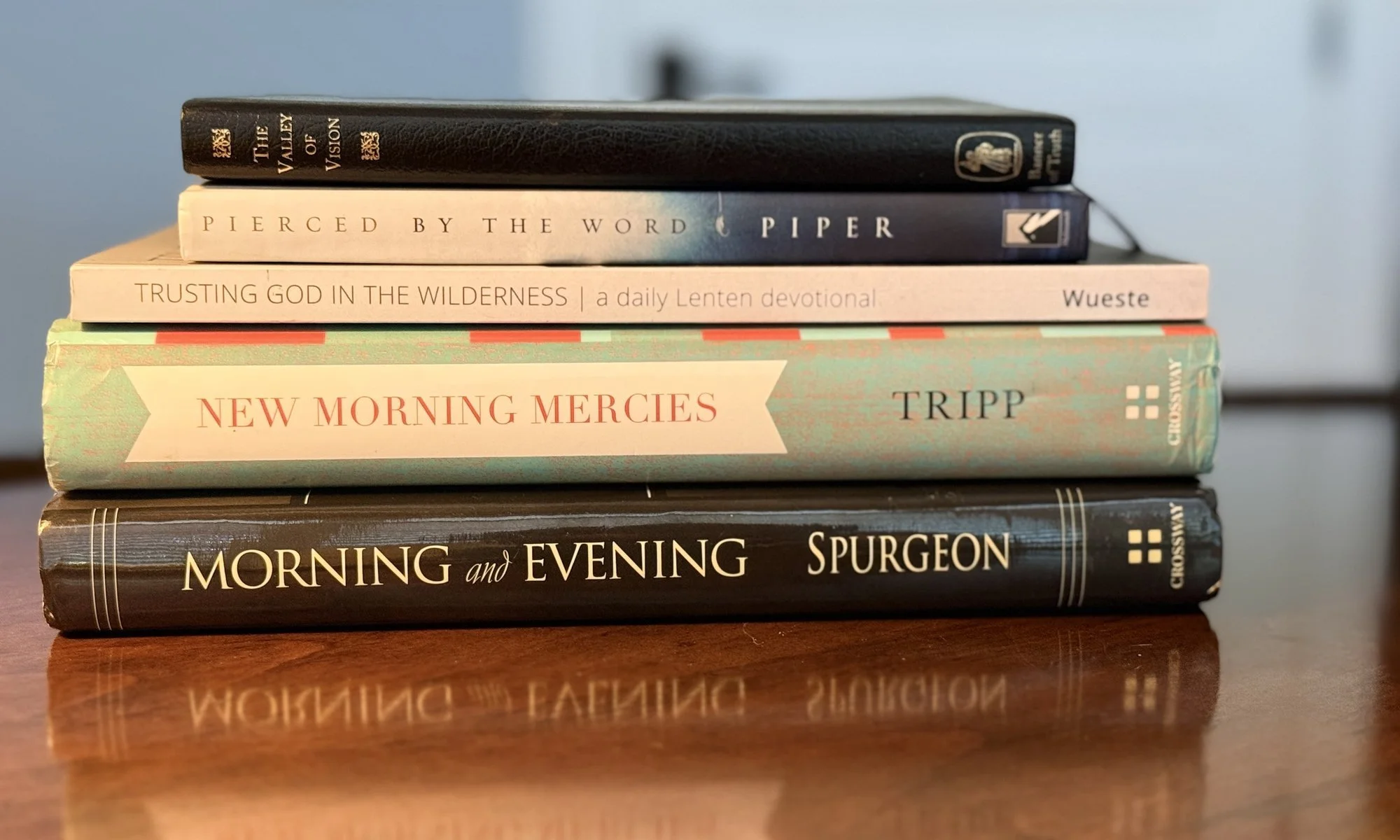
New Morning Mercies by Paul David Tripp
Trusting God in the Wilderness by Ted Wueste
Pierced by the Word by John Piper
Classic Devotionals and Prayers:
My Utmost for His Highest by Oswald Chambers
Streams in the Desert by L. B. Cowman
Morning and Evening by Charles Spurgeon
The Valley of Vision edited by Arthur Bennett
Bible Study Resources:
Matthew Henry’s Commentary on the Whole Bible – Also available for free download
Make It Your Own
I've learned that meaningful time with God doesn't need to look the same for everyone. For example, many people I know sing during their devotional time and say it is one of the richest parts of their worship. I do not sing during my time with God, though I do have a small hymnal with me. Singing has never been a gift of mine (you can ask anyone I know). My sister sometimes has her devotional time outside and has a small sketchbook and colored pencils with her. I love that idea as well.
Please know that if you miss a day, a week, or even a month, you haven't failed. Don’t give up or stay away because you feel guilty. Just open your Bible and start listening and talking to God again. He’ll never turn you away.
Over the years, I've changed how I read the Bible, pray, and journal, and I’m sure I'll keep changing things. Now I have much more time to spend with God than I did when I had a busy career or was raising a family. But the reason I spend time with God has never changed. I want to know him better.
Some mornings I come away delighted in God, excited about what I’ve learned, and eager to face the day. Other mornings I'm distracted, tired, or struggling to concentrate. But I've learned that the value of my time with God isn't measured by how much I read, how long I pray, or how I feel afterward. Over the years, those ordinary mornings with my Bible have shaped my life. I keep coming back because I need him.
I'd love to hear what your time with God looks like. Are there practices or resources that have been especially helpful to you?